

ECC · Engineered Cementitious Composite
Ultra-High Ductility Concrete Giving Structures Ductility
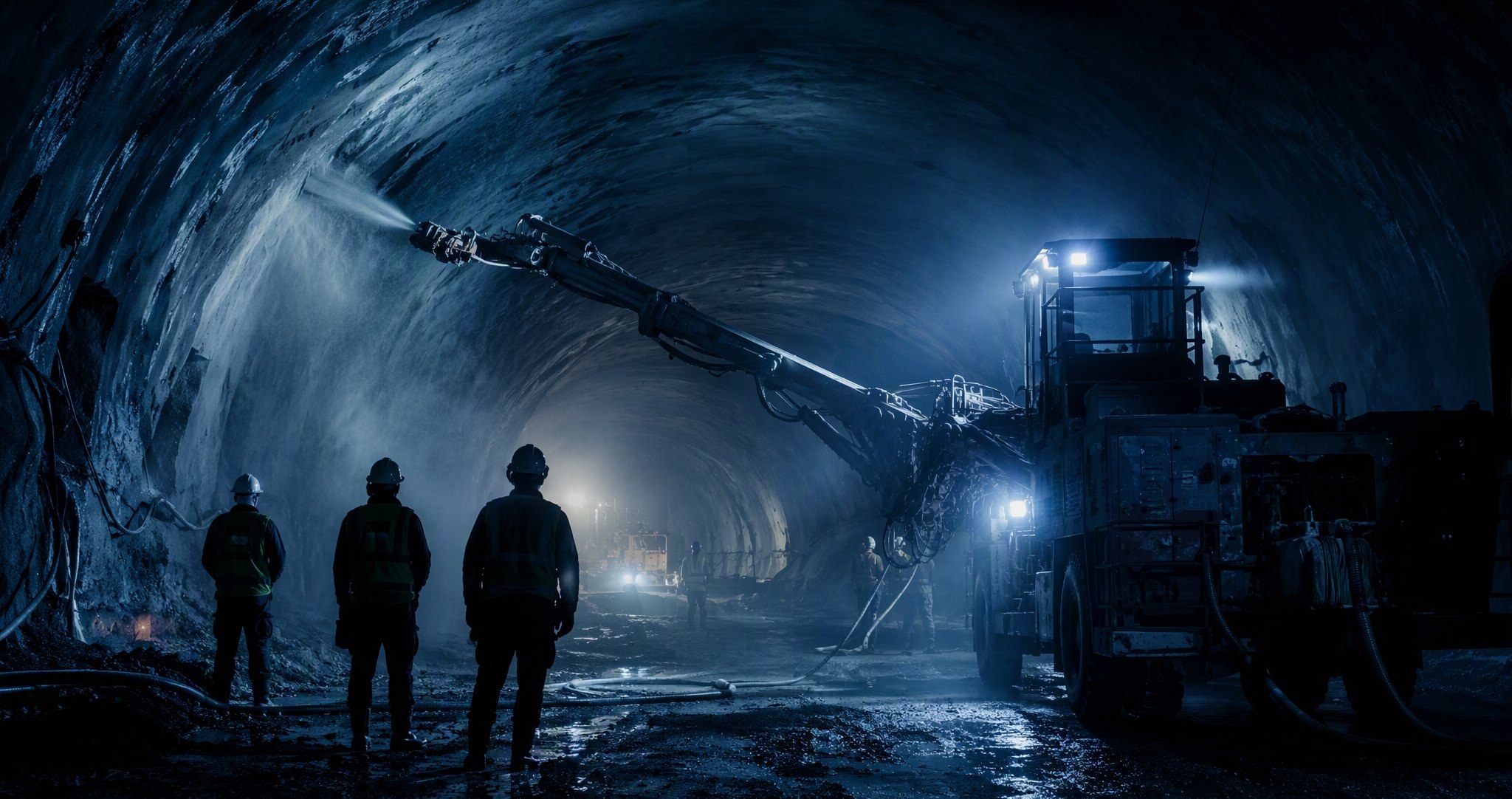
Overview: With PVA fibers as reinforcement and a cementitious matrix, micromechanical design produces multiple cracking and strain-hardening behaviour. Ultimate tensile strain can reach 3%–12%, with notable crack-control capability and ductility. It suits locations with high demands on crack resistance and durability, such as strengthening of existing structures, bridge deck overlays, tunnel linings and hydraulic works.
ECC Series Ultra-High Ductility Concrete ENGINEERED CEMENTITIOUS COMPOSITE
A next-generation engineering material that replaces conventional strengthening and repair solutions, balancing on-site practicality with long-term service performance.
ECC (Engineered Cementitious Composite) is a high-ductility material produced by introducing high-strength, high-modulus PVA fibers into a cementitious matrix and optimizing the fiber, matrix and interface relationship through micromechanics. Under tensile loading it does not form a single through-going crack; instead it develops numerous fine microcracks while continuing to carry load, showing clear strain hardening. Ultimate tensile strain can reach 3%–12%, more than 100 times that of ordinary concrete.
Compared with ordinary and fiber-reinforced concrete, the core value of ECC is that it cracks without failing: crack width can be reliably held below 100 μm, effectively blocking the ingress of water, chloride ions and carbon dioxide, and markedly improving durability under harsh conditions such as freeze–thaw, wet–dry cycling and de-icing salts.
The material offers good self-compacting and pumping performance. It can be used both for strengthening and repair of existing structures and for crack-resistant, waterproof locations in new works, with thin application thickness, low added load and controllable impact on the original structure.
Fiber masterbatch
PVA fibers pre-blended with a dedicated admixture to control fiber dispersion and interfacial bonding, governing the ductility and crack count of the material.
Specialty admixture
Cement, fly ash, silica fume and fine aggregate are blended by gradation to ensure matrix density, flowability and dimensional stability.
Pre-blended mix
Mixed on site in the specified ratio and stirred with water before use, with no special mixing equipment, suited to normal site conditions.
PROJECTS
Selected Projects
ECC solutions for your project
From material selection and mix design to on-site application guidance, RENQIANG Construction provides end-to-end technical support and sample supply. Please call us to discuss your project.
Contact Us